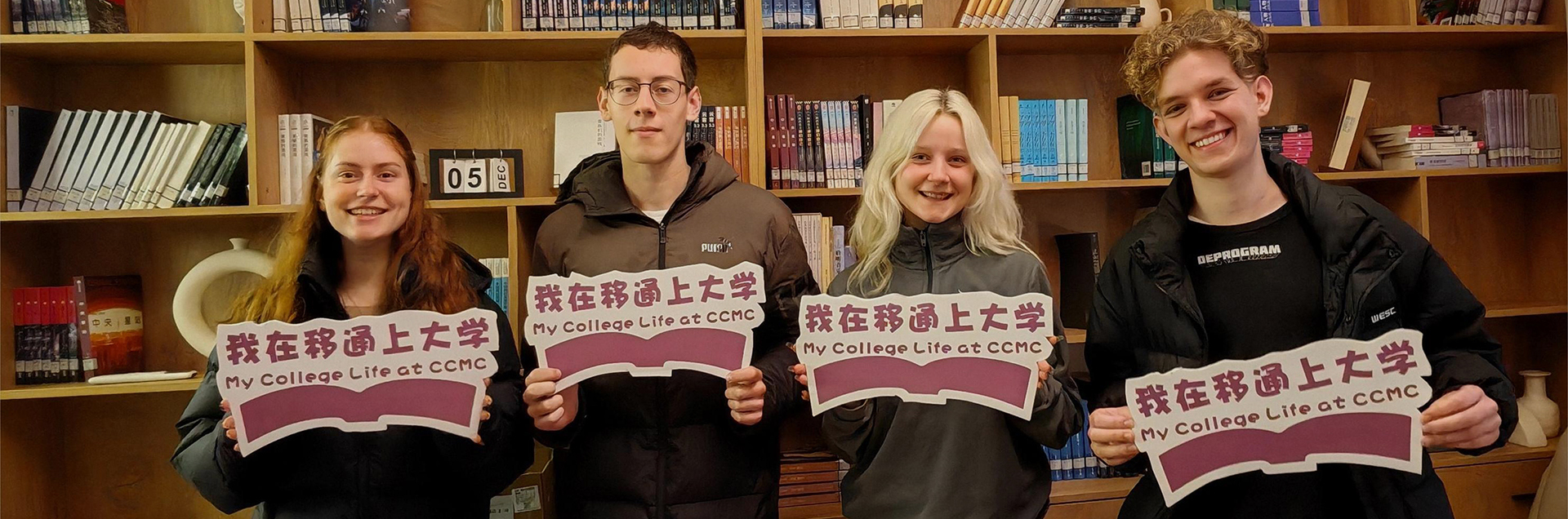
From 2008 to 2025, starting with its first Sino-German cooperative institution and evolving into the only university nationwide offering three Sino-German undergraduate programs, Chongqing Yitong University’s journey in Sino-German cooperation is an inspiring chronicle of constant breakthroughs and sustained innovation.
Today, let us trace the course of time and look back upon those shining milestones.

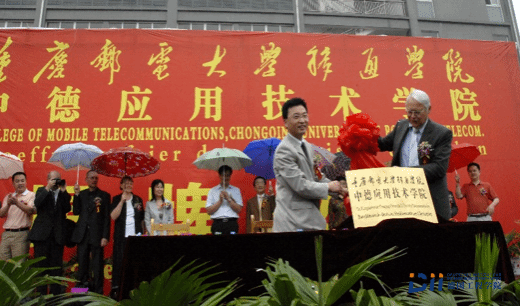
In May, the first Sino-German cooperative educational institution — the Sino-German Institute of Applied Technology — was officially founded. It marked the starting point of the university’s international education initiative and laid the foundation for what would later become Asia’s largest base for studying in Germany.
Also in May, professors from the first visiting German university, Anhalt University of Applied Sciences, set foot on the campus of Chongqing Yitong University, bringing with them authentic German-style teaching.
In that year, we sowed a visionary seed: to empower more Chinese students with access to top-tier German engineering education.
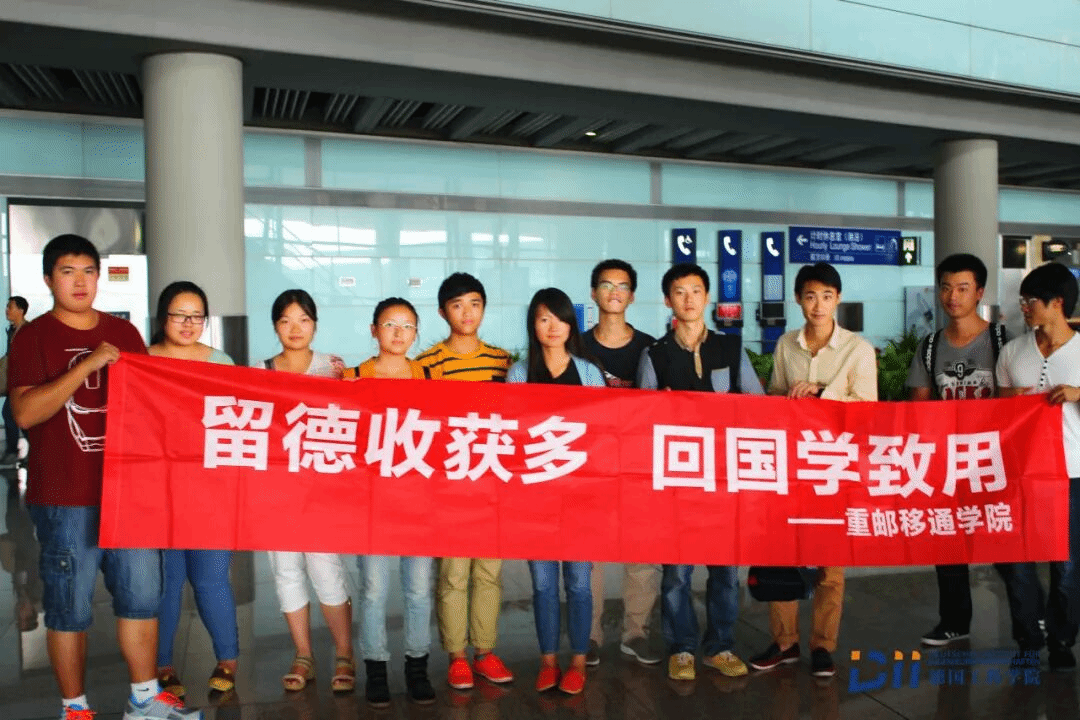
In September 2009, the first cohort of 53 students in the Sino-German joint training program departed for Germany, launching a 3+2 college-to-undergraduate articulation program with Anhalt University of Applied Sciences and Nordhessen University of Applied Sciences.
In September 2010, the first group of 31 undergraduate students set off for Germany under the inter-university exchange program, participating in a 3+1.5 undergraduate program with Nordhessen University of Applied Sciences. Later, partner institutions expanded to include Mittweida University of Applied Sciences and Hamm-Lippstadt University of Applied Sciences.
When the first batch of students stepped onto German soil, they carried not only their luggage, but also boundless aspirations for the future.

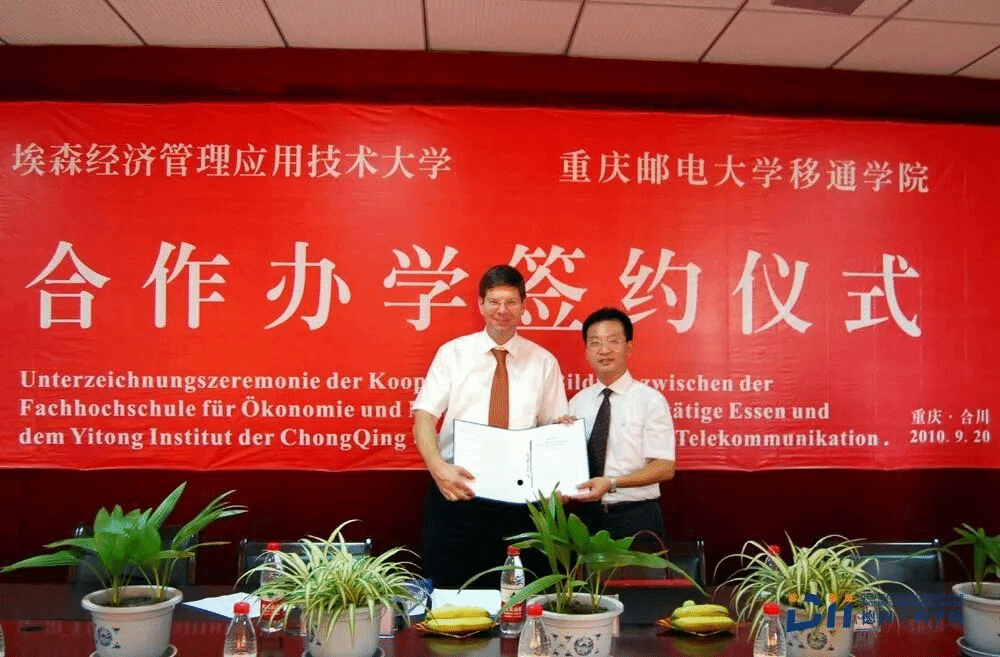
In September, the university launched a 4+1 Sino-German bachelor-master combined program in cooperation with FOM University of Applied Sciences for Economics and Management in Germany. From then on, students could complete their undergraduate studies at Chongqing Yitong University and proceed directly to Germany for master’s degree studies.
In November, Dirk Scholten-Akoun, the first German visiting professor, joined the university, marking the steady expansion of its international faculty team.

This year stood out as a landmark milestone:
In June, the university claimed its first national first prize in a disciplinary competition — the Goethe Cup National German Speaking Competition for Higher Vocational Colleges. Since then, we have participated and won awards for three consecutive sessions.
In August, the first group of 30 students departed for a study tour in Germany. Starting from 2014, the university has invested tens of millions of yuan annually to fully launch international study tour programs covering the United States, Germany, Belgium, Singapore and other countries.
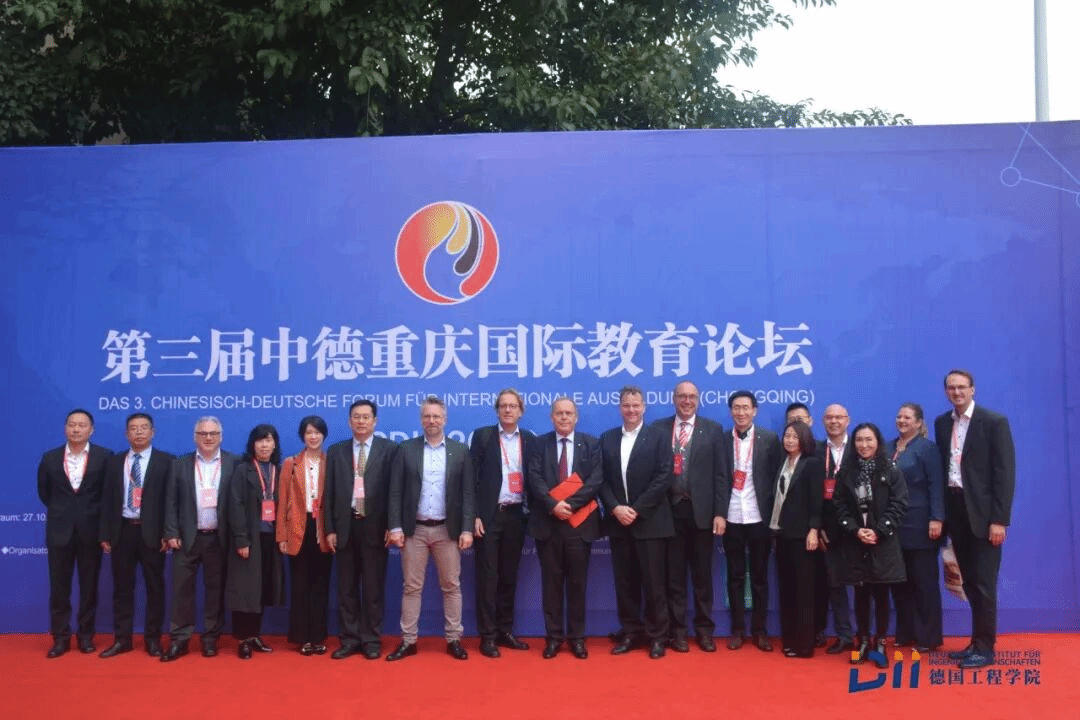
In September, the First Sino-German Chongqing International Education Forum was successfully held. The second, third and fourth sessions followed in 2016, 2019 and 2024 respectively, evolving into an important platform for Sino-German educational dialogue.
In October, the university received a donation of 50,000 original German books, offering abundant academic resources for teachers and students alike.
In December, the first integrated multi-functional campus building was put into use. As the first and only building nationwide integrating teaching, accommodation, self-catering facilities, leisure libraries and a theatre under one roof, it has become a "second home" for students.

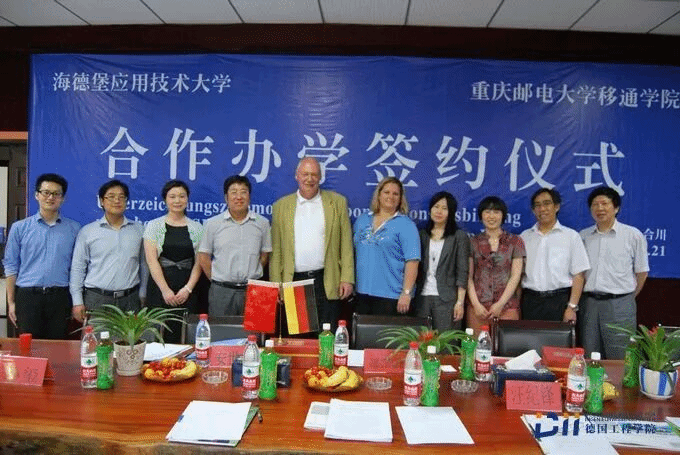
In January, the 3+1 undergraduate program in Electrical Engineering and Automation, jointly launched with Heidelberg University of Applied Sciences, Germany, was officially approved. This marked the university’s first Sino-foreign cooperative undergraduate program.

In February, the first monograph on Sino-German higher education research, Investigation and Research on German Universities of Applied Sciences, was published, providing valuable references for the development of application-oriented universities in China.
In May, the first Germany-focused research institution, the German Research Institute, was established (renamed the Dai Jiqiang German Research Institute in 2021), dedicated to research in Germany’s science and technology, education, culture and related fields.
In September, Professor Michael Namokel, Vice President of Nordhessen University of Applied Sciences, became the first German professor to deliver formal courses on campus.
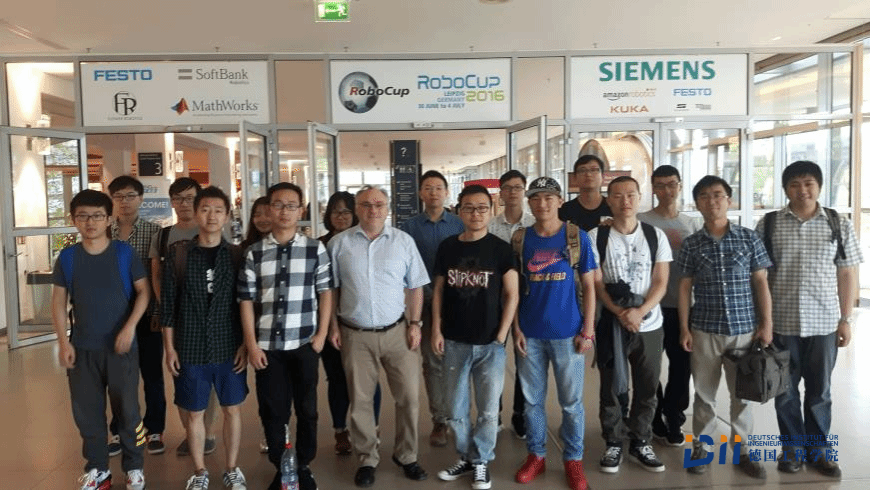
In October 2016, Bai Lingyu became the first student to obtain a master’s degree from a German university, graduating from Mittweida University of Applied Sciences.
In July 2017, the university secured its first teaching achievement award for Sino-German cooperative education. The project Taking the Opportunity of the Ministry of Education’s Pilot Construction of Application-oriented Universities and Innovating the Training of Engineering Talents by Drawing on the German Model won the Third Prize of Chongqing Municipal Teaching Achievement Awards.
In September 2017, the first batch of German-Chinese professors, Hu Bo and Qu Wenmin, joined the faculty team.
Also in September 2017, the first selection of overseas study supervisors was completed, marking the full launch of the tutor system.
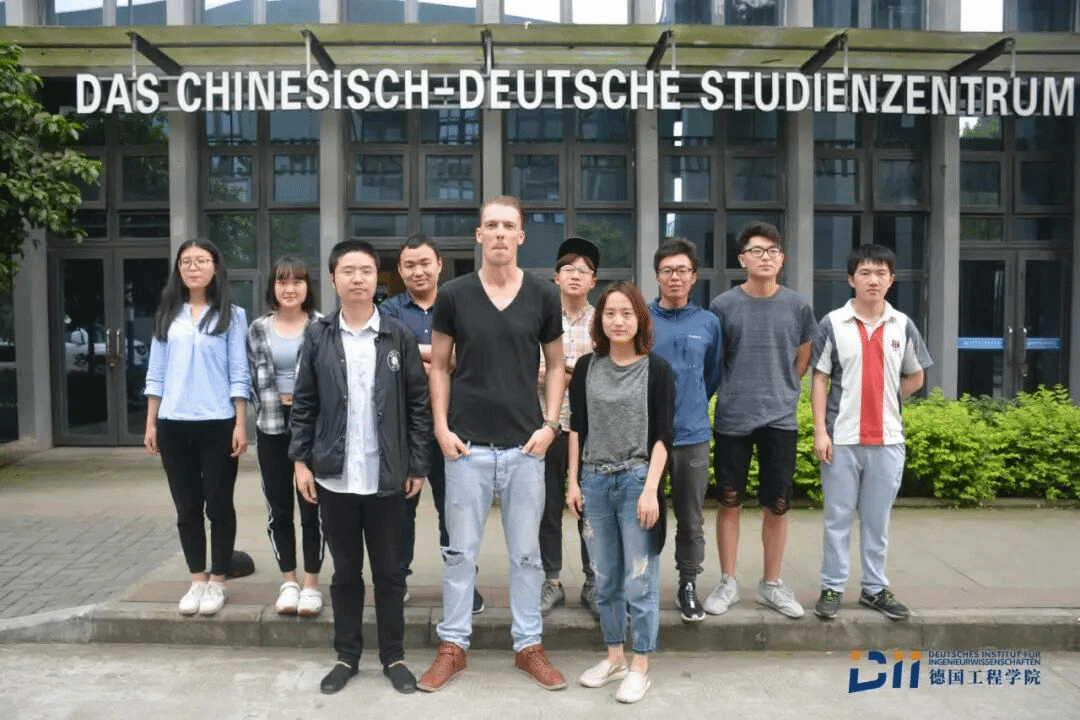

In January, four majors — Electrical Engineering and Automation, Communication Engineering, Internet of Things Engineering and Software Engineering — became the first batch of programs accredited by ASIIN, the German Accreditation Agency for Degree Programs in Engineering, Informatics, the Natural Sciences and Mathematics.
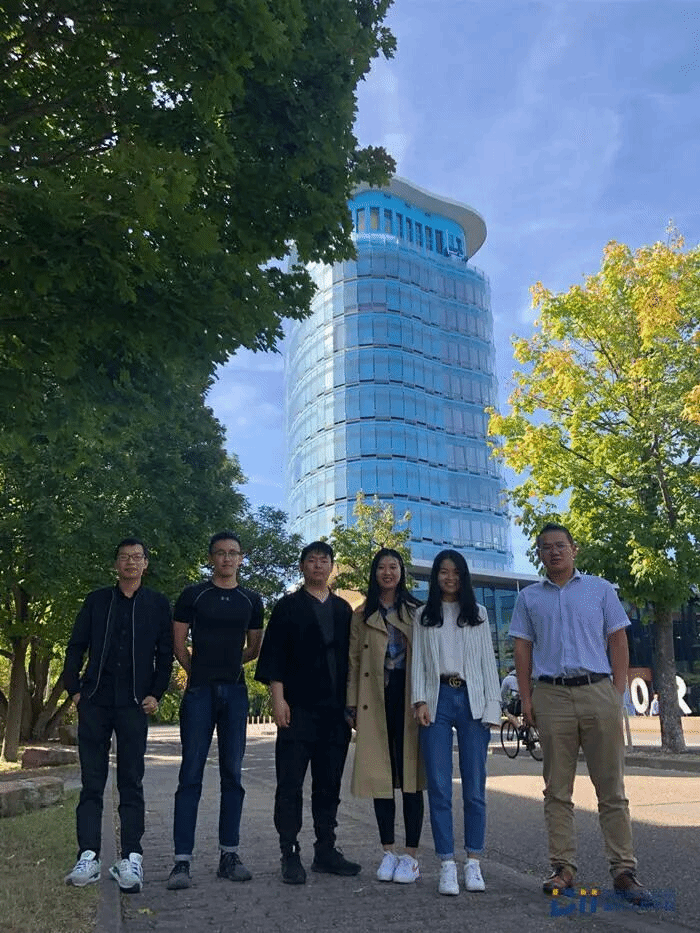
In October, Wang Jinlai became the first graduate to secure employment in Germany, working at UST Sensor GmbH.
In January 2021, the 3+1 undergraduate program in Mechanical Design, Manufacturing and Automation jointly run with Nordhessen University of Applied Sciences in Germany was officially approved.
In September 2021, Zhang Shuo, the first student pursuing a doctoral degree via a Sino-German cooperative program starting from a junior college background, enrolled at The Hong Kong Polytechnic University to undertake PhD studies.
In May 2022, the German Engineering School was founded, specializing in talent cultivation for officially approved Sino-German cooperative undergraduate programs sanctioned by the Ministry of Education.
In October 2022, Li Chang became the university’s first student to pursue a PhD in Germany, undertaking further studies at the Technical University of Munich.
In June 2023, Compilation of German Higher Education and University of Applied Sciences Regulations, the first translated work on laws and regulations of German universities of applied sciences in China, was published.
In December 2024, the International Digital Trade Industry College was jointly established with German alumni enterprises and local enterprises, building an integrated platform for international industry-university-research collaboration.
Also in December 2024, three majors — Big Data Management and Application, Digital Economy, and Business Administration — successfully passed professional accreditation by Germany’s ZEvA.
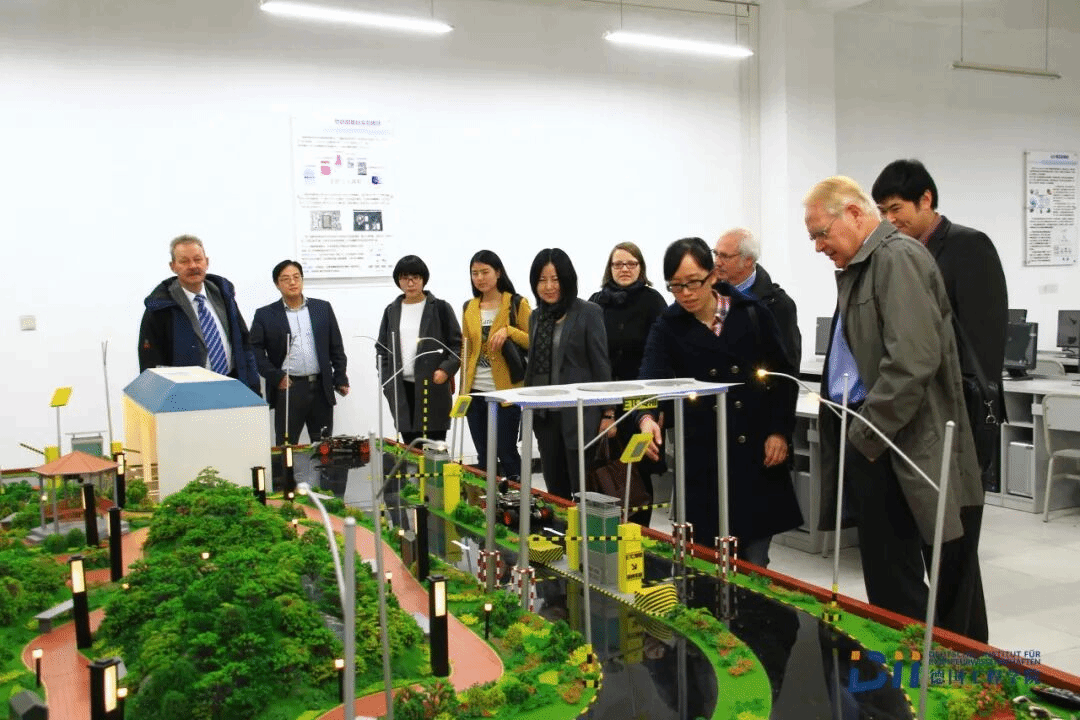

In April, the Sino-foreign cooperative undergraduate program in Digital Media Art in partnership with the Berlin University of Applied Sciences for Media, Communication and Economics (Hochschule Medien) was officially approved.
With this approval, Chongqing Yitong University has become the only university in China with three officially approved Sino-German undergraduate programs.
As Asia’s largest base for German study abroad programs, this title is truly well-deserved.
From 2008 to 2026, how far have we come? We have accumulated 18 years of professional study-abroad service experience;We have cultivated more than 1,200 students with Sino-German dual degrees;We have built an international faculty team featuring 56% of courses delivered by German professors and a 90% bilingual teaching rate;We have established a full-chain development pathway covering undergraduate to doctoral studies, as well as academic advancement to overseas employment.
The next milestone is waiting for you to create together.











 CN
CN